Master Informational Interviews for Hidden Jobs
 Angela Roberts
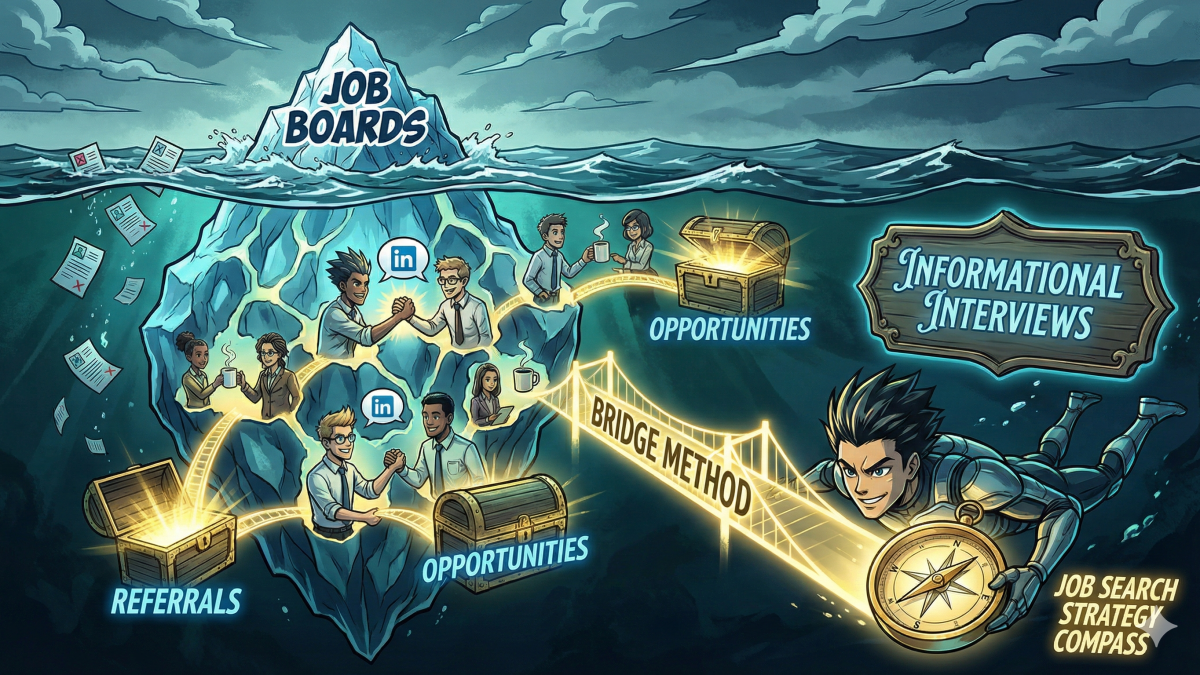
Master Informational Interviews to uncover hidden jobs below job board icebergs.
Learn How to Unlock Informational Interviews
You stare at job boards day after day. Resumes go out, but silence follows. Job hunting starts to feel like shouting into an empty room when you rely only on job boards as your source.
This is where the "Iceberg Theory" comes in. Job boards show only the tip of the iceberg, while the real opportunities sit below the surface. Companies prefer referrals because they bring reduced cost, minimal risk, and faster onboarding. Referrals from trusted team members and networks cut uncertainty and speed up team integration.
However, access to those opportunities below the surface requires a shift in your networking mindset. This guide walks you through strategies centered on informational interviews so that you can build relationships that reveal unposted positions.
Networking Mindset Shift
Traditional networking often pushes awkward “Can you get me a job?” requests or clunky introductions. I call these “Transfers.” Unfortunately, this old-school approach makes your contacts sense neediness, and they pull back. Instead, I want to teach you how to embrace “Transformations,” where you learn to nurture real bonds so that value flows both ways between you and your contact.
Let us reframe the informational interview in this Transformation context. An informational interview isn't a handout. It is a value exchange between professionals. When you lead with that idea, you focus on sharing your field insights or your research on industry hurdles. In return, your contact is more inclined to share the realities of their role and team.
This approach honors their knowledge and positions you as a colleague, not as a supplicant.
The goal is to craft outreach around shared gain. For example, you might say, “Your perspective on X challenge really stood out to me. May I have 15 minutes to learn how your team is approaching it this year?” This kind of wording respects your contact’s time and sparks curiosity instead of resistance.
Organizations rely on networks when hiring because trust builds faster through relationships. Informational interviews create that trust in a natural, conversational way.
The Bridge Method
Requesting an informational interview doesn't have to feel scary. To secure these conversations more easily, use something I call the “Bridge” Method to target “Internal Champions.” Simplistically, Internal Champions are the doers in your desired roles, not just people in hiring roles.
To identify Internal Champions, you must first find your “True North” – those target companies that genuinely interest you. We covered how to identify those target companies in this article: How to Stop Randomly Applying. Once you have that list, search LinkedIn for aligned titles that match your goals: “Digital Marketing Manager,” “Clinical Research Associate,” “Operations Project Lead,” and so on. Then refine your list by organization, and scan their posts and mutual connections.
You can also join online events or tap into your alumni network to identify these internal champions. This step matters because internal champions may not hold hiring manager titles, but they often influence hiring decisions behind the scenes.
Once you have names, you can deploy the 3-Step Outreach Formula:
- The Connection: Refer to a specific link between you and the champion. For example: “Your LinkedIn update on GTM scaling really echoed the work I did at [your previous or current company].”
- The Context: State the intention of your outreach clearly. “I am exploring similar positions and am interested in understanding how teams like yours operate in today's market.”
- The Ask: Keep your ask small and clear. “Would you be open to a 15-minute informational interview to share how your team approaches [specific challenge]?”
You can send this outreach through tailored LinkedIn messages or emails. Keep initial messages brief, three sentences at most. If you do not receive any response, follow up once after about a week: “I am revisiting my note about [topic]. I would still really value your insight and would be happy to share my experience as well.”
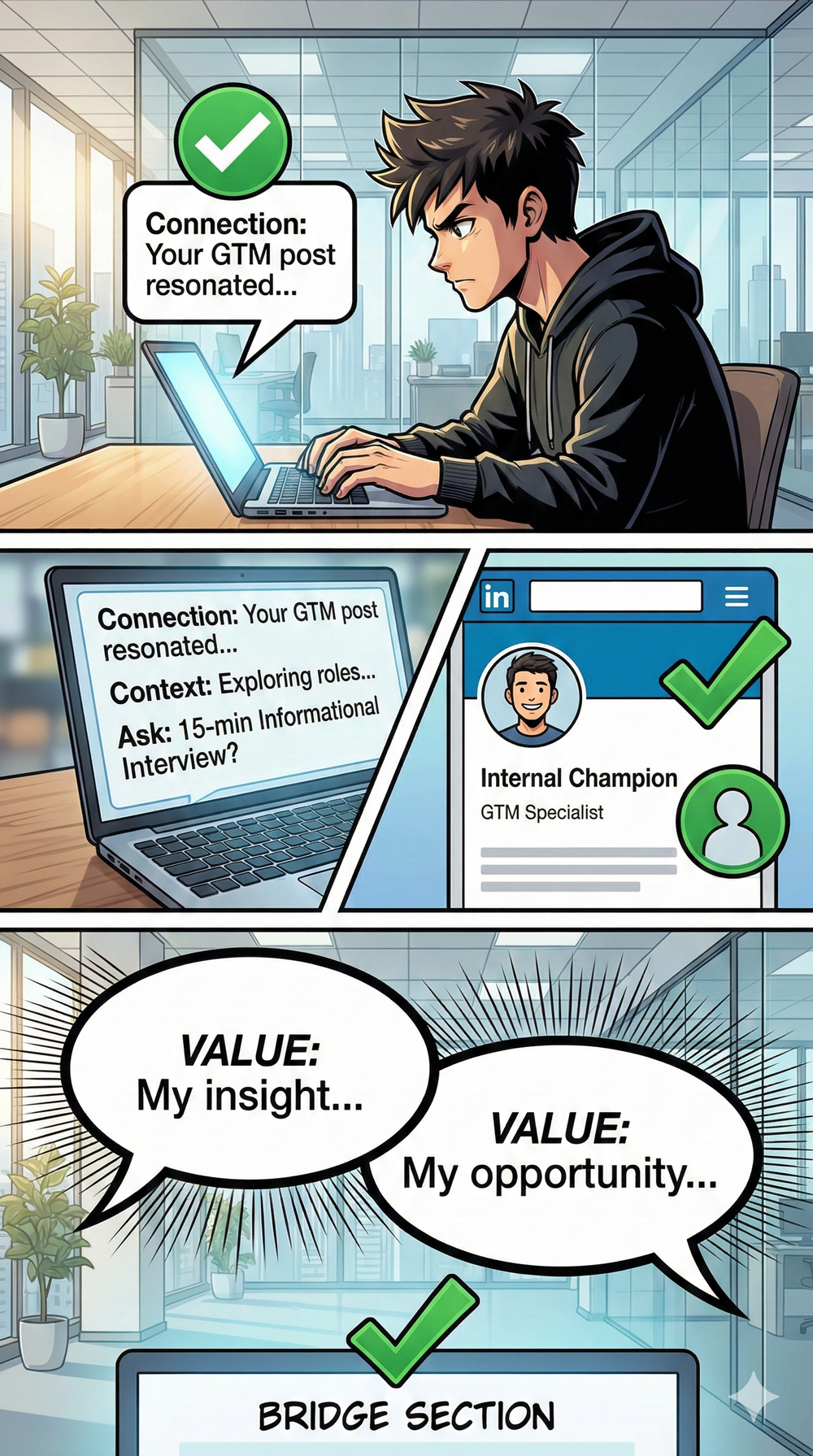
Bridging a relationship with a champion often leads you closer to influencers and decision makers. Champions endorse candidates they know and value.
Leveraging Compass Tools
I recommend that you use the Job Search Strategy Compass to track your outreach. The Action Planner tab is perfect for this. Create an Action Planner table (or something similar) that captures:
- Name
- Company
- Role
- Outreach Date
- Response
- Next Step
- Notes
For example:
- Jane Doe | Acme Corp | Marketing Lead | 1/26/2026 | Yes, 2/2 | Informational interview on 2/5 | Lead generation hurdles discussed
- John Smith | Beta Inc | Ops Manager | 1/27/2026 | No reply | Follow-up 2/3 | Shared LinkedIn post
As you log your outreach, patterns will start to emerge. You will see who tends to respond, which phrases or approaches spark replies, and the tracker will keep you from accidentally pinging the same person twice.
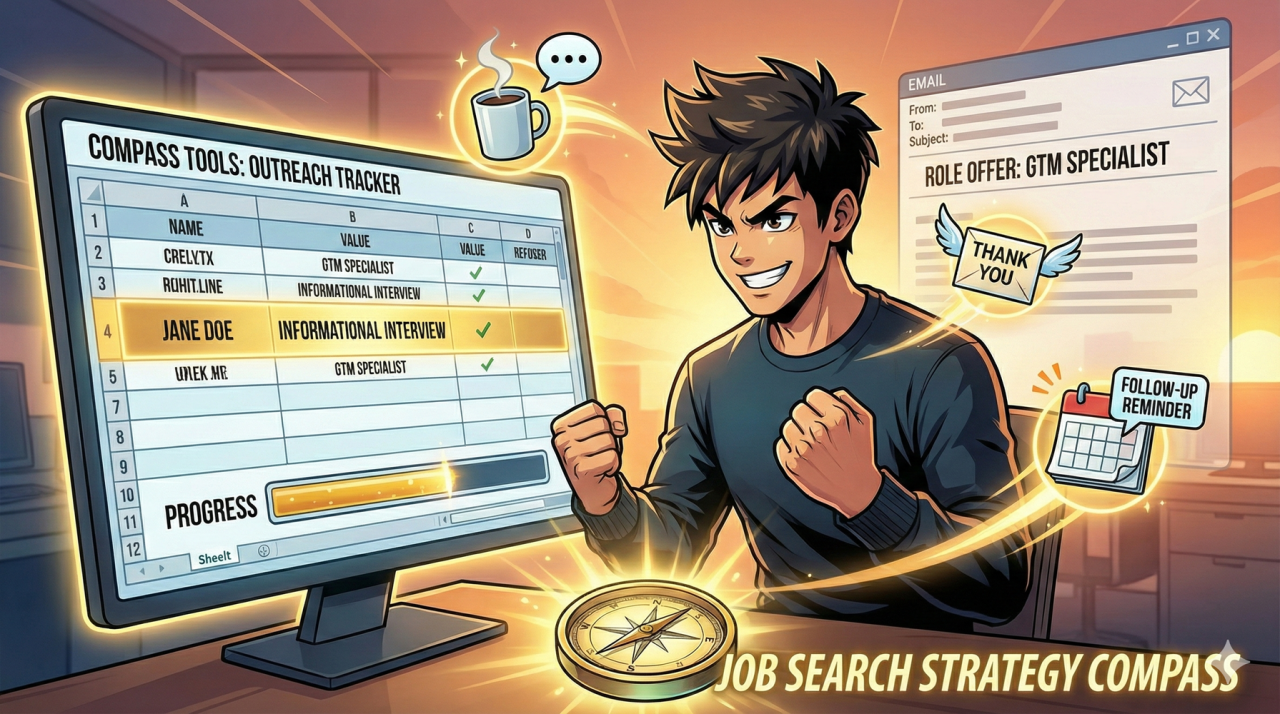
You will also want to refine a “Follow-Up” cadence that keeps you visible without feeling pushy.
- After your initial outreach, pause for 5–7 days and then send a message that adds value: “Your post about GTM strategy reminded me of this article; I thought you might find it interesting.”
- After an informational interview, send a thank-you note within 24 hours. You might say, “Thank you for sharing your perspective on X. Here is the article or resource I mentioned during our conversation.”
- Then, reconnect every 4–6 weeks later with an update: “I applied your advice to a project, and the results have been…” This closes the loop and shows that you used their guidance. It also keeps you in front of them, fostering a longer-term relationship.
Being consistent, but not aggressive, in your follow-ups builds familiarity and trust over time. Champions tend to remember and support people who show up as thoughtful contributors.
Final Action Step
Networking isn't only about who you know. It is about who knows you and understands what you can do. Informational interviews highlight the value you bring and reveal hidden opportunities that will never appear on a job board.
Here is how you can get started today: reach out to three people at Target Companies you have already identified (this article explains how to do that: How to Stop Randomly Applying). Ask each person about one key challenge their team is facing this year, and use the Bridge Method to frame your outreach.
You only need to start small. Brief, genuine interactions add up. Referrals will begin to appear. New roles will surface.
Your Compass tracker is ready for you. Let's get started.
Categories: : Job Search Best Practices, Networking