3 Reasons Your Mid-Career Pivot is Stalling (And How to Fix It)
 Angela Roberts
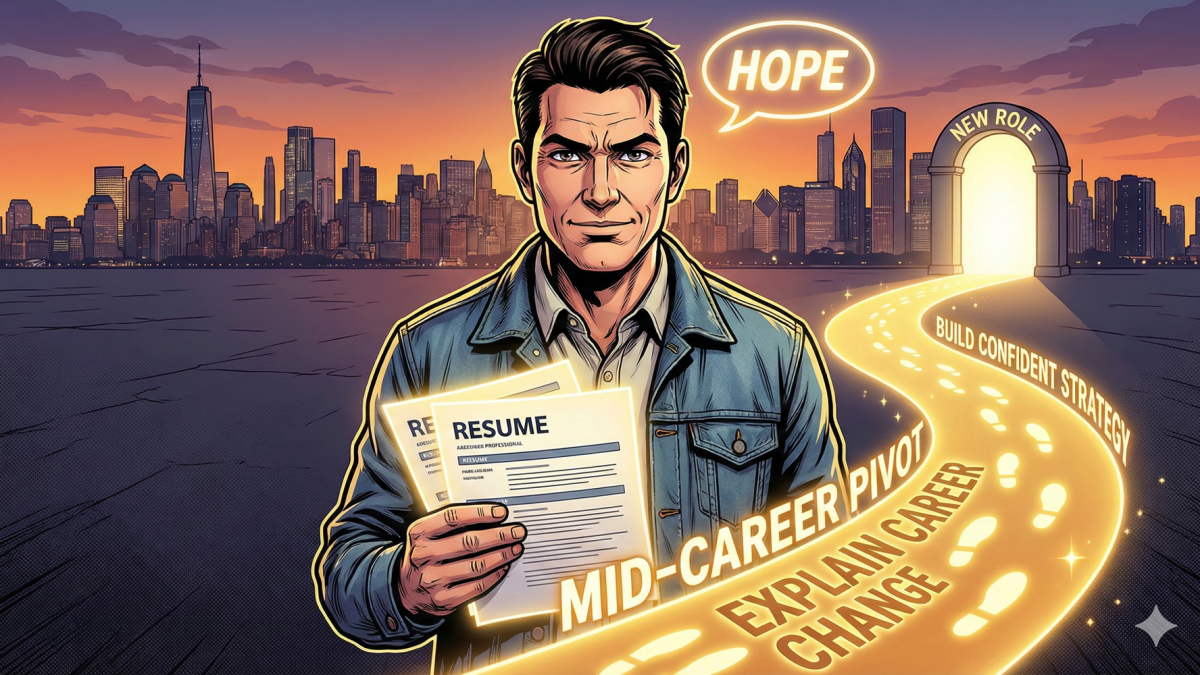
Master your mid-career pivot with clear job search strategies and learn how to explain a career change that gets results.
A Mid-Career Pivot Isn't a Reset
You have built a career you can be proud of, but now you are ready for something different. Maybe you are shifting from sales to project management, or leaving operations to explore clinical strategy. You know where you want to go, but the road ahead feels a little foggy.
If your mid-career pivot feels like it has hit a standstill, you are not alone. Many accomplished professionals find themselves stuck right here, ready for change, full of experience, but unsure why the search keeps coming up short.
Let's talk about why your career change might be losing momentum, and what to do about it.
1. You Have Not Learned How to Explain a Career Change (Effectively)
Being able to effectively explain your career change stops more mid-career professionals than you might think. It isn't about lacking experience. It is about how your experience is being communicated.
Maybe your resume is filled with strong results, but written in the dialect of your old industry. Recruiters may not speak that language and, therefore, may not be able to translate your experience to the current role. In other words, if your resume doesn't immediately connect the dots for them, they move along to the next candidate.
Your challenge isn't that you are unqualified. You just aren't translating your experience.
So, what do you do? You build a bridge.
Stop talking only about what you did. Focus on how you did it, and which of those skills matter for your new goal. Instead of “Managed a team of 10 account reps,” show them “Led and mentored a cross-functional team that improved client delivery timelines by 15 percent.” That switch reframes you from “sales veteran” to “strategic leader.”
Next, craft your bridge story. Something like this: “After 15 years in client-facing roles, I realized what I enjoyed most was designing systems that improve operations. That is what led me toward project management.”
And let us be honest. Keywords matter. Pull up five job descriptions for your target role. Look at the language used. If those words are not on your resume or LinkedIn profile, the Applicant Tracking System will not find you. Make sure it does.
2. Your Job Search Strategy Is Outdated or Nonexistent
We both know the job market looks nothing like it did ten years ago. If you are still applying online and hoping the algorithm does the rest, that might be the problem.
It is not about applying to hundreds of openings. It is about creating a strategy that puts you in the right rooms, digitally and personally.
Start with real connections. Pick 10 to 15 people who work in roles or industries you want to enter. Send a short message. Ask for ten minutes of their time. The goal is not to ask for a job. It is to understand how your background fits into the space and how others made the jump.
Then, turn LinkedIn into a living part of your strategy. Optimize your profile for the job you want, not the one you are leaving. Comment on posts, share thoughtful insights, and join conversations in your target sector. Show up where your new peers are already talking.
Most important of all, get specific. Identify 10 companies you truly want to work for. Research them. Follow their work. Engage with their people. When you eventually apply, it will not be a cold submission. It will be an informed, warm introduction.
3. You Are Getting in Your Own Way
Mindset. That sneaky little thing that can derail all your good work before you even hit “send.”
I have seen this more often than not, experienced professionals second-guessing their worth, doubting whether they are “too old” or “too late.” Let me tell you something right now. You are not too anything. You bring wisdom, consistency, and perspective that cannot be taught.
But those doubts show up in interviews. They whisper during your networking conversations. They hold your confidence hostage.
So it is time to reframe how you see yourself. You are not leaving your old career. You are building on it. You are taking the best parts of the past fifteen or twenty years and applying them in new, meaningful ways. That is power.
And you do not have to do it alone. Find a mentor, a career coach, or a community with peers who have walked this road. Talk to them. Let someone remind you of your wins when you start to forget.
Finally, acknowledge your progress. Every networking chat, every revised resume, every skill you pick up, that is movement. Do not dismiss those little victories. They compound.
Final Thoughts
A mid-career pivot isn't a reset. It is a strategic reinvention. You have earned your experience. Now, it is about presenting it in a way that fits where you are headed. When you learn how to explain your career change clearly, develop a focused job search strategy, and strengthen the mindset to back it all up, you will find that momentum again and the opportunities waiting for you on the other side of it.
Categories: : Job Search Best Practices