What Does Your Digital Shadow Say About You?
 Angela Roberts
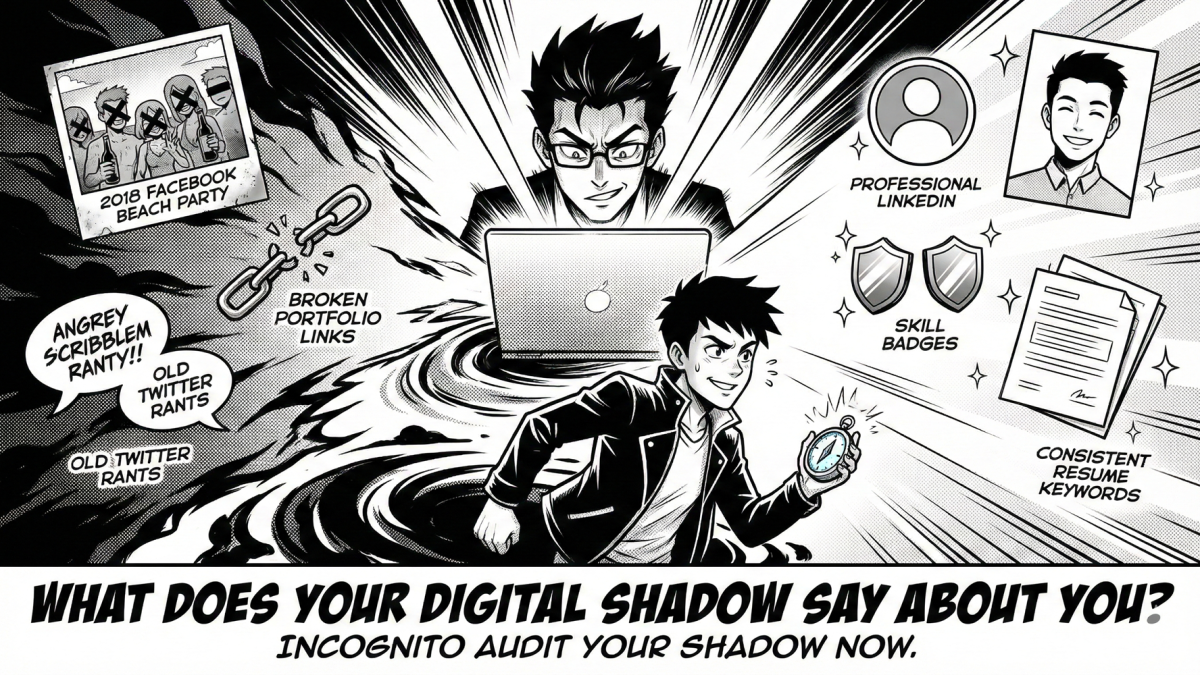
Audit your digital shadow: Learn how to see what recruiters see and clean red flags, align LinkedIn with resume keywords, and build trust.
Imagine a Recruiter Googles Your Name Right Now
What is the first thing they see? Your polished LinkedIn profile with recent projects and glowing recommendations? Or a dusty 2018 Facebook profile with that photo from the beach party you barely remember? Or maybe it is a half‑finished blog from 2014 or a Twitter account you forgot you even had.
Your digital shadow follows you everywhere. It isn't just what you post. It is everything that shows up when someone searches for you. And in today’s hiring world, recruiters and hiring managers absolutely search candidates online before they ever pick up the phone.
They want to see consistency, professionalism, and proof that you are who you say you are on paper.
If page one of your search results tells a disjointed or unprofessional story, you have already lost before the conversation begins. But here is the good news: you can audit and improve your digital footprint in about an hour. Let's walk through it step by step.
Step 1: The Incognito Audit
Start with the most honest search possible. Open an incognito or private browser window. Type your "full name" AND "your target role or industry". For example: “Jane Doe" AND "marketing manager” or “John Smith" AND "project manager operations.”
Now scan the first page like you are the recruiter with 90 seconds to decide if you want to call. Look for these red and green flags:
Red Flags (Fix These):
- Old social profiles you no longer use or control
- Photos or posts that feel too casual for your target roles
- Inconsistent job titles, dates, or company names across platforms
- Broken links to portfolios or websites
- Content that contradicts your resume (different timeline, unexplained gaps)
Green Flags (Enhance Current or Build More of These):
- Active, updated LinkedIn profile at the top
- Portfolio, GitHub, or personal site with recent work
- Industry articles, speaking engagements, or contributions
- Consistent branding across platforms
Take notes. Screenshot the first page. This is your baseline.
Step 2: Cleaning the Slate
Do not try to erase the internet. Not only is this impossible, it is also suspicious. Instead, focus on what you can control.
First, archive or delete old accounts you no longer use. Go to X (formerly Twitter), Instagram, Facebook, and anywhere else you have a presence. If you are not actively posting, set those accounts to private or deactivate them. Recruiters care most about what is public and current.
Next, update biographies across active platforms. Your LinkedIn, X bio, and any personal site should tell the same core story. Use consistent phrasing: same job titles, same key skills, same professional photo. Tools like Namecheap or HaveIBeenPwned can help you find forgotten accounts.
Finally, claim your Google presence. Set up a Google Business Profile if you are freelancing, or at least make sure your LinkedIn shows up first by keeping it active with thoughtful posts.
Step 3: Aligning the Message
Your digital shadow must reinforce your resume, not contradict it. Discrepancies create distrust. If your resume says “Digital Marketing Manager, ABC Corp 2022–Present” but LinkedIn shows “Marketing Coordinator until 2023,” that gap raises questions.
Ensure alignment:
- Job titles and dates match exactly.
- Core skills from your resume appear in your LinkedIn skills section.
- The Featured section on LinkedIn showcases the same projects or results from your resume bullets.
Think of your LinkedIn as the “director's cut” of your resume. The resume is tight and scannable. LinkedIn adds color through testimonials, longer descriptions, and mini-stories showing proof of impact. But the story stays consistent. Recruiters notice when everything lines up. It signals attention to detail and authenticity.
Final Thoughts
Your digital shadow exists whether you shape it or not. You might as well become the architect of your story.
Spend one hour this week on your incognito audit. Pick the two biggest red flags and fix them. Update your LinkedIn headline and About section to match your target role. Pin one project that shows your best work.
When a recruiter Googles you, they should think, “This person is organized, professional, and exactly who they say they are.” That trust opens doors before you ever walk through them.
Small, intentional steps compound. Your digital footprint will start working for you instead of against you.
Categories: : Job Search Best Practices, Personal Branding, Social Media