The One-Way AI Interview: Should You Say Yes?
 Angela Roberts
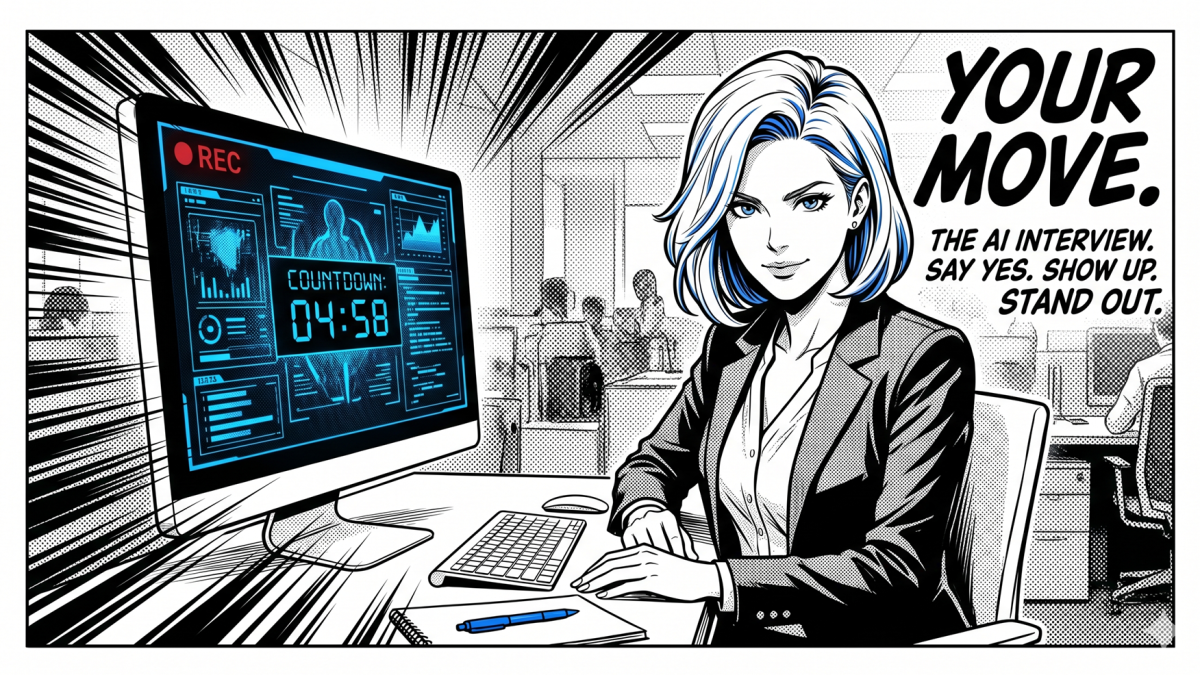
31% of candidates skip AI interviews and lose their shot. Learn how to prepare, perform, and win the one-way video interview.
Why Saying Yes Could Be the Smartest Career Move You Make This Year
You have submitted your resume, maybe even tailored your cover letter, and then it happens... the email arrives. A company wants to move you forward in their hiring process. But there is a catch. It isn't a phone screen with a recruiter. And it isn't a Zoom call with a hiring manager.
It is a one-way AI video interview, and you have 72 hours to complete it.
For a lot of job seekers, that's where the momentum stops.
In fact, research shows that 31% of candidates decline one-way AI interviews entirely. They feel uncomfortable, unprepared, or frankly, put off by the idea of talking to a camera with no one on the other end. And I completely understand that instinct. It feels impersonal, even a little unsettling, the first time you encounter it.
But here is what I need you to hear: every candidate who declines hands their opportunity directly to someone who said yes.
That is the whole conversation. And if you want to stay competitive in today's job market, where applications are up 65% (and available positions are down by 12%), you cannot afford to opt out of a format that 43% of companies are already using or planning to adopt.
What Is a One-Way AI Interview, Really?
Let's demystify it first, because anxiety lives in the unknown.
A one-way video interview is exactly what it sounds like: you receive a link, you log in, you're presented with interview questions one at a time, either in text or video format, and you record your responses on your own schedule. There is no live interviewer. No scheduling back-and-forth. No calendar conflicts.
You are given a short window to think (usually 15–30 seconds), then a window to respond (typically 60–180 seconds per question). Most platforms (HireVue, Spark Hire, VidCruiter, and Willo) give you one or two practice questions to settle in before the real thing begins. Once you submit, a recruiter, hiring manager, or AI scoring engine reviews your responses on their end.
That's it. It isn't a trap. It is a tool. And once you understand how it works, it becomes something you can genuinely use to your advantage.
What the AI Is Actually Scoring
Here's where it gets interesting, and where most candidates are operating completely in the dark.
Platforms like Spark Hire score your recorded responses across six specific factors: four competencies and two personal qualities. Knowing what they are changes how you prepare.
The four competencies are Communication (are you clear and structured?), Execution (do you demonstrate follow-through and real results?), Comprehension (did you actually answer the question that was asked?), and English Proficiency (can you communicate fluently using the language of your field?).
The two personal qualities are Enthusiasm (does your energy signal genuine engagement?) and Motivation (does it come across that you want this role, not just any role?).
Each factor is rated Strong, Neutral, or Weak. An overall score is generated to help the hiring team prioritize who they watch first. You read that right: a strong score means a recruiter reviews your video sooner and with a more favorable lens already in place.
This isn't guesswork. It is a scoreboard. And unlike a live interview, where you can't control what the interviewer notices, here you know exactly what is being evaluated.
The Competitive Edge Nobody Talks About
Let me share the math with you plainly.
If 31% of candidates decline the interview, they're already out of the running. Of the 69% who do complete it, the majority walk in underprepared: no awareness of the scoring criteria, no structured framework for their answers, no intentional setup, and no camera practice.
That means a candidate who prepares strategically and completes the interview is competing against a dramatically smaller, less prepared field than the original applicant pool suggested.
For mid-career professionals, this format carries an additional advantage that often goes unrecognized. You have years of experience, complex projects, and real outcomes to speak to. The AI is scoring for substance... and you have it. The SARB method (Situation, Action, Result, Benefit) is your best tool: it gives the AI the structured, evidence-based narrative it is designed to reward.
For those navigating a career pivot, this format can actually work in your favor, too. You control the narrative. You can connect the dots between your previous experience and your target role clearly and deliberately without being interrupted or redirected by an interviewer who has already formed a bias based on your resume.
Five Things You Can Do Before You Hit Record
1. Run a full tech check the day before. Not five minutes before you record. Camera, microphone, internet connection, lighting, and background. Every one of these is fully within your control, and every one of them affects how you are perceived.
2. Prepare a story bank, not a script. Identify three to four strong SARB-structured examples from your experience that can flex to answer multiple question types. Bullet-point the framework; speak it naturally. Use our Elevator Pitch posts and podcasts to help you prepare.
3. Look at the lens, not the screen. The camera lens is the interviewer's eyes. Looking at your own image on screen creates the impression of an averted gaze. This is a small adjustment with a significant impact on how engaged and confident you appear.
4. Use your think time. The 15–30 seconds of preparation time the platform gives you is real. Use it. A composed, structured answer beats a fast but rambling one every time.
5. Bring energy deliberately. Enthusiasm is literally a scored factor. Smile before you speak. Vary your vocal tone. Let the camera see that you actually want this. Flat delivery of an excellent answer still scores lower than a warm, energized delivery of a good one.
The Bottom Line
One-way AI interviews are not a sign of a cold, dehumanizing hiring process. They are a response to overwhelming application volume, and when you understand them for what they are, they become one of the most level playing fields in modern recruiting. Same questions. Same format. No interviewer bias on the front end. Just you, your preparation, and your ability to show up on camera as the professional you already are.
The candidates who will outcompete you for that next role are the ones who said yes, showed up prepared, and treated the camera like a handshake.
Tomorrow's webinar is built to make you one of those candidates. We're going to walk through exactly how these platforms work, what the AI scores, how to prepare your environment and your answers, and how to deliver a performance that moves you to the top of the review queue — not because you gamed the system, but because you showed up better than everyone else.
Register here, and come ready to take notes. This one is worth your hour.
Categories: : Interview Tips, Job Search Best Practices