One-Way AI Interviews: A Coach’s Guide to Standing Out on Camera
 Savannah York

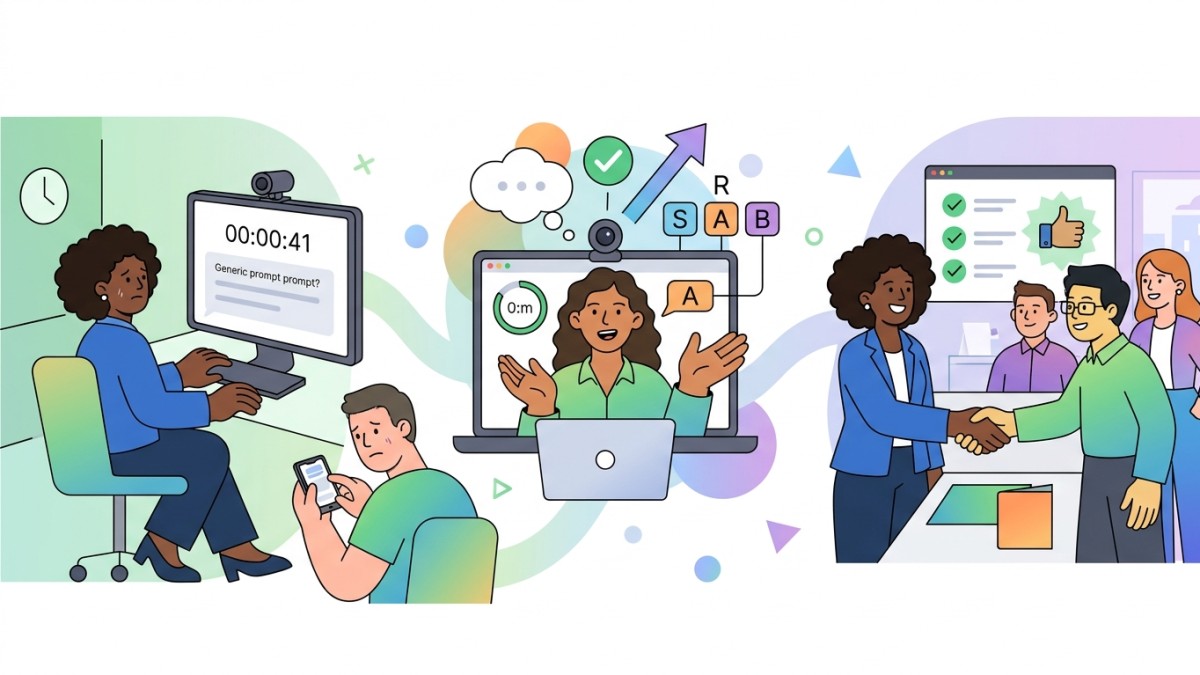
One-way AI interviews can feel awkward. Learn how to prepare, set up your space, and answer with clarity so you stand out to hiring teams.
How to Ace One-Way AI Interviews When No One Is on the Other Side
Let us talk about one-way AI interviews. Hiring has taken a strange turn. Many of us now interview with a screen, a countdown clock, and a whole lot of quiet.
Lovely, right?
One-way AI interviews (you may also hear them called asynchronous or prerecorded interviews) have become a regular step in the hiring process for many employers. Instead of chatting with a person, you record your answers to a set list of questions. Recruiters or hiring teams watch your responses later, and some use AI tools to help sort or score what they see.
Employers love the efficiency. You, on the other hand, might find the whole experience cold, unfamiliar, and a bit ridiculous.
Here is the truth, though. Whether we like this format or not, it is not going anywhere. So let us make sure you know how to handle it.
What Exactly Is a One-Way AI Interview?
In a one-way AI interview, you answer questions on camera with no live interviewer in the room. Most platforms give you a brief window to think and a set amount of time to respond.
So this format does not reward conversation. It rewards clarity.
Hiring teams watch how well you communicate inside a controlled setup, how directly you answer each question, and how confidently you talk about your experience. Nobody jumps in to rescue a wandering answer, and nobody nods along while you search for the right words.
That is exactly why preparation matters even more here than in a traditional interview.
Why Employers Choose One-Way AI Interviews
Companies lean on this format for a few practical reasons. It cuts down on scheduling headaches, speeds up early screening, and lets hiring teams compare candidates who all answer the same questions.
That makes sense. When a company receives a flood of applications, reviewing recorded answers takes far less effort than lining up dozens of live screening calls.
Consistency plays a big role too. A standard format lets hiring teams evaluate more candidates within the same basic structure. In theory, that keeps the process organized.
In reality, it can also leave you feeling like a number. The format may save the company time, but you still need to understand how to shine inside it.
What You Gain and What You Give Up
One-way interviews do offer you some real perks.
You choose when to complete them, you control your surroundings, and you can prepare your answers before you hit record. That gives you more flexibility than a live interview, where you have to think on your feet in the moment.
The tradeoff matters, though.
You cannot build rapport. Nobody asks a clarifying question to steer you back on track. And if your first answer starts off rough, you have no natural way to recover. Add a shaky camera, poor audio, or awkward timing, and the whole thing becomes harder than it needs to be.
So yes, this format can work for you. You simply need to know how to use it well.
How to Prepare for One-Way AI Interviews
Treat your preparation as a deliberate plan, not a casual afterthought.
Start with the role itself. Learn what the job truly requires. Then pick the stories from your career that line up best with those requirements. If the role involves working closely with clients, prepare examples that highlight communication and problem solving. If the role centers on leadership, prepare stories that show judgment, ownership, and sound decisions. This Behavioral Interview Question Worksheet can help you prepare in each of these key areas.
Next, practice out loud with a timer. Many one-way interviews limit how long you can talk. Ramble, and the clock runs out on you. Rush, and you sound frazzled. Notes help. A fully memorized script does not. When you sound overly rehearsed, you lose credibility, and you might even come across as fraudulent. Please do not do it.
One simple framework I love is the SARB approach. It works a lot like the STAR interview method, but it takes one more step by spelling out the benefit of each example:
- Situation
- Action
- Result
- Benefit.
This structure keeps your answer focused and helps the person watching your recording follow your point with ease.
Your Setup Matters More Than You Think
Your technical setup counts as part of the interview.
- Pick a quiet room
- Use good lighting
- Silence your phone
- Test your microphone and camera before you start
- Keep your background tidy and your face fully visible.
These details are not just for looks. They shape how polished and professional you come across.
Also, look directly into the camera when you answer. It sounds simple, but it changes how connected and confident you appear. If you keep watching your own image, you will look distracted. When you look into the lens, you look like you are making eye contact, and that tells the viewer you are engaged.
A great answer can still fall flat in a poor setup. A solid setup helps your answer land the way you intend.
What to Do When the Clock Starts
When the question pops up, do not burn those first few seconds overthinking it.
Read the prompt. Breathe. Answer the question they actually asked.
I know that sounds obvious, but so many people overcomplicate this step. They pile on background, hide their main point, and spend half the recording working their way toward an answer.
Skip all of that.
Lead with your answer. Share one strong example. Then stop talking.
If they ask about conflict, explain how you handled a conflict. If they ask about your leadership skills, share an example that shows you leading. If they ask about problem solving, walk them through the problem and the outcome.
I encourage you to build elevator pitches that answer these common questions. These elevator pitch examples and templates can help you get started.
Remember to stay direct and stay clear. That is the whole game.
Final Thoughts on One-Way AI Interviews
One-way AI interviews now play a regular role in modern hiring, whether job seekers love them or not. That means the candidates who prepare well will have the edge.
You do not need to dazzle anyone, and you do not need to sound like a talk show host. You also do not need to outsmart the software.
You need to show up organized, confident, and clear.
So when one of these interviews lands in your inbox, treat it like the real evaluation it is. Prepare your stories. Practice your timing. Set up your space. Keep your answers tight. And remember, nobody expects perfection.
Your goal is to sound like someone worth moving forward.
Sources
- AI Recruiting Tools 2026: Trends, Costs, and Key Players
- One-Way Video Interviews: The 2026 Playbook for Faster Hiring
- What are asynchronous interviews and do they work in 2026?
- What is a one-way video interview?
- How To Conduct An Asynchronous Video Interview In 2026
- AI hiring compliance for 2026: Key insights from Hirevue experts
- Best practices for setting up asynchronous video interviews
- Computer says no. Are AI interviews making it harder to get a job?
- How to Prepare For an Asynchronous Video Interview
- One-Way Interview? Candidate’s Ultimate Guide & Checklist
- How to pass a pre-recorded video interview?
- Expert Guide On One-Way Job Interviews: Prepare & Succeed
Categories: : AI, Interview Tips, Job Search Best Practices