The Mid-Career Pivot Playbook: Protect Your Seniority
 Savannah York
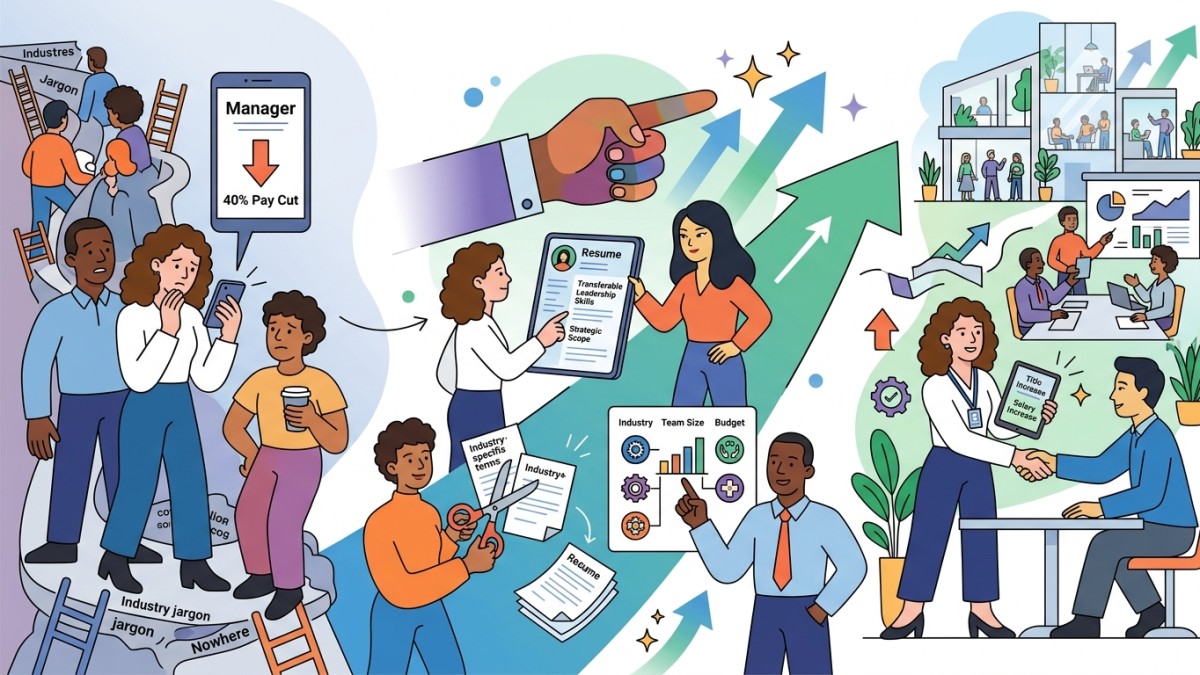
A Mid-Career Pivot does not have to mean a pay cut or demotion. Learn how seniority is really measured and how to protect your level.
Mid-Career Pivot: How to Change Lanes Without Taking a Demotion
Picture this. You are up late scrolling job boards, and suddenly you spot it: an exciting role in a brand new industry, the kind that actually makes you feel alive again. Then you hit the fine print. The title reads "Manager" and the salary sits roughly 40 percent below what you currently earn. You never expected a mid-career pivot to hit this hard.
It feels like a punch in the gut.
The fear shows up fast and loud: "I refuse to reinvent myself in a way that feels like a demotion." You worked far too hard to go back to fetching coffee or asking permission for a long lunch.
Here is the good news. You do not have to accept that trade. A mid-career pivot can absolutely move you sideways or even upward, as long as you understand how seniority truly gets evaluated once you step outside your current industry bubble.
Where the Pay Cut Fear Really Comes From
We all grew up hearing the same traditional career ladder story. You start at the bottom, you climb one rung at a time, and you never dare jump to a different ladder. If you do jump, the old rules insist you must start over at the bottom.
That story falls apart the moment you reach mid-career. Once you carry 15 to 20 years of experience, you are no longer a beginner, which means a genuine mid-career pivot becomes not just possible but realistic.
Most professionals chasing a mid-career transition run into what I call the Beginner on Paper problem. Your resume probably tells the story of where you have been rather than what you are truly capable of doing now. When your resume leans entirely on industry-specific jargon, a recruiter in a new field notices only what seems to be missing instead of the deep expertise you actually bring.
Seniority, in the real world, never boils down to how many years you occupied a particular seat. Most industries rely on specific signals to determine whether you count as a heavy hitter or a junior player. They examine your scope of responsibility. Do you manage a budget? How large is your team? How complex are the problems you tackle daily?
They also examine your decision-making authority. Do you own the outcome when things go sideways? Do you drive strategic change, or do you simply follow someone else's manual? These signals carry across nearly every sector. If you managed a ten million dollar budget in manufacturing, that same financial literacy transfers directly to managing a similar budget in tech. The materials you work with might change, but your level of leadership does not.
Consider These Three Tactics to Protect Your Senior Status During Your Pivot
First, lead with your functional level instead of your past title. If your title read Senior Account Executive in Manufacturing but you effectively ran the entire department, describe yourself as someone who performed as Head of Revenue Strategy. Choose language that reflects the function and level of your work rather than whatever label an old HR department once assigned you.
Second, target roles with equivalent scope rather than familiar titles. Read job descriptions closely and note the size of the budgets and teams involved. If you currently manage fifty people, do not apply for a role managing two, no matter how appealing the company seems. Look for a role where the size of the problem matches your current capacity.
Third, use your interviews to negotiate the actual level of the role. Once you sit in the room, ask pointed questions to confirm you are not being under leveled. Ask about decision rights. Ask who reports to you and who you report to. If the answers sound like junior work, address it immediately. You might say, "Based on my experience managing high stakes turnarounds, I am looking for a role that carries the authority to drive strategy at a senior level."
None of this means you should never accept a slight adjustment. I believe firmly in slingshot moments, because a real difference exists between a temporary step back and a genuine demotion. A strategic mid-career pivot might involve a modest title change or a small pay dip when you are entering a high growth sector. Just make sure any trade off comes paired with equity and a clear, documented path to promotion.
A true demotion looks different. It locks you into junior level work with no realistic way to advance. Before you sign anything, ask yourself honestly: "In twelve months, will I be doing the work of a senior leader, or will I still be waiting for someone else to tell me what to do?" If your honest answer points to the second option, walk away.
Your experience carries real market value that never belongs to a single industry or a single building. Your responsibility is to make sure that value gets priced correctly in your new field. Never let a recruiter convince you that you are a newbie simply because you are changing lanes.
Pull up a job description today for a role you actually want. Compare its scope directly to the work you already do. When the scope lines up, the seniority should line up too.
Categories: : career development, Career Pivot, Interview Tips, Job Search Best Practices