Layoff Anxiety: The Coaching Guide to Rediscovering Your Value
 Savannah York
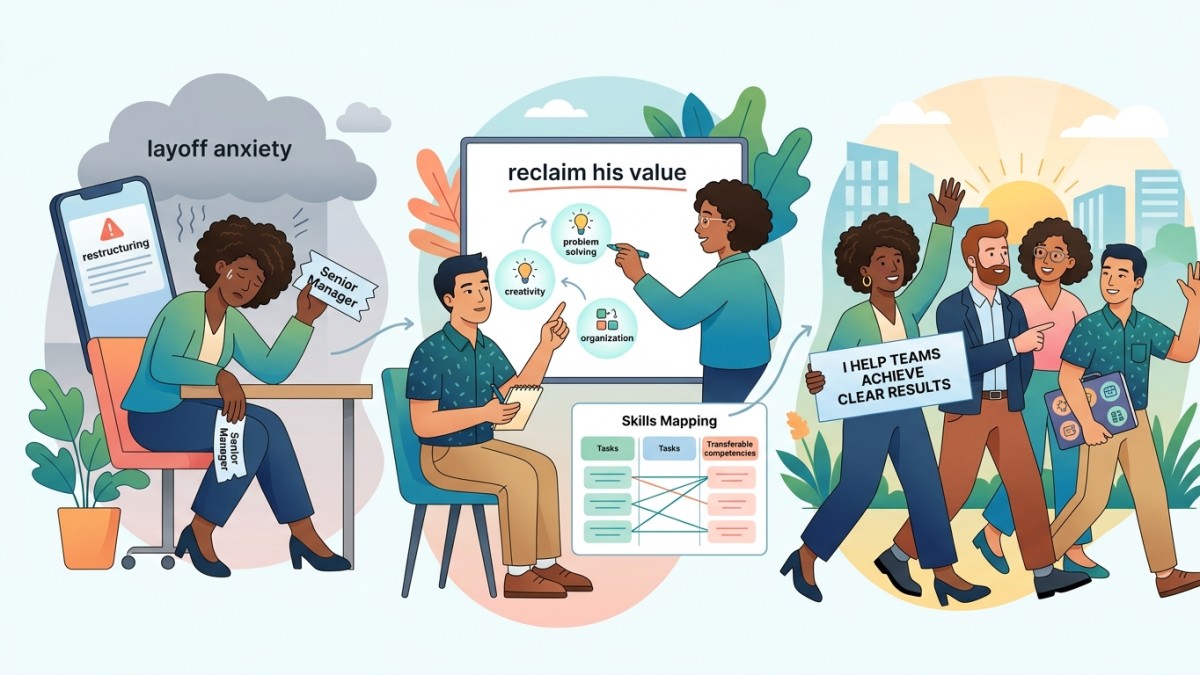
Layoff Anxiety is real, but your job title was never your identity. Discover three coaching questions to reclaim your true professional value.
Layoff Anxiety: Why Your Job Title Was Never Your Identity
Let us talk about layoff anxiety, that tight, sinking feeling you get the moment your company mentions "a small restructuring." Your inbox has not even refreshed yet, but your mind has already started packing boxes, updating your resume, and imagining a temporary stay on your cousin's couch.
Here is the truth: layoff anxiety hits almost every professional at some point. LinkedIn practically doubles as group therapy for this exact fear. Everyone asks the same quiet question: "If I lose this job, what does that say about me?"
It says nothing about you.
Believing that, however, takes real work. That is where coaching comes in.
The Trap of Title Entrenchment
Layoff anxiety often grows out of something coaches call Title Entrenchment. This happens when you start treating your job title as your entire identity instead of one small part of it.
The shift happens gradually. You introduce yourself as "a Senior Clinical Trial Manager" and over time, that title fuses with your sense of self.
That fusion creates a problem. When a company downsizes, you do not just lose a paycheck. You can feel like you lost your purpose, your confidence, and even your standing at the family dinner table.
A 2024 Gallup Workplace Study found that 61 percent of professionals tie their self-esteem directly to their job title or their employer's reputation. No wonder layoffs can feel like identity theft. The real antidote starts with separating what you do from who you are.
Your title changes every few years. Your value does not. Your skills keep growing, and the problems you know how to solve keep expanding right along with them.
Three Coaching Questions to Reclaim Your Value
When layoff anxiety starts shaking your sense of self, pause and work through these three questions.
Who are you outside of work? Imagine describing yourself to someone who has never seen your resume. Would you call yourself curious? Creative? Organized? The person who keeps everyone calm when the printer jams? Those traits stay with you long after a paycheck ends.
When have you thrived, and why? Think back to a moment when you truly nailed it professionally. Which skills carried you through? Which mindset kept you steady? Those qualities belong to your core values, not to the job description that happened to hire you.
What problems do you solve naturally? Every professional carries a "zone of genius" the thing you do almost without effort. Maybe you simplify chaos. Maybe you craft messages that land. Maybe you turn frustrated clients into loyal fans. These transferable skills travel with you into any role.
Get Practical: Map Your Transferable Skills
Grab a notebook and create three columns.
- List the tasks you handled in your last three roles.
- Name the broader competency behind each task. For example, "wrote project reports" becomes "translated complex data into actionable insights."
- Reframe each skill so it makes sense outside your current industry.
Step back and look at the pattern you just built. Your professional identity never depended on your title. It always depended on the results you create and the problems you solve.
Consider using a free tool like O*NET OnLine to cross check your skills against other roles. Career coaches and HR professionals rely on it often, and it can reveal just how portable your talent truly is.
Build Your Core Value Proposition
This step turns your self reflection and skill mapping into something coaches call your Core Value Proposition, a single sentence that captures your professional identity without naming a title or an employer.
It might sound like:
"I help teams turn communication chaos into clear, actionable plans."
Or:
"I make data make sense for people who do not love spreadsheets."
Once you nail down this statement, you can walk into any interview, networking event, or career pivot with steady confidence. Even if a layoff happens, you will never rebuild your identity from zero.
You will already know exactly who you are and what you offer.
Final Thoughts on Layoff Anxiety
Nobody enjoys uncertainty. But losing a title never means losing your value. Treat it instead as a tap on the shoulder, a reminder that your potential reaches far beyond that one box.
Once you truly believe that, layoff anxiety stops feeling like a dead end. It becomes a detour toward something bigger.
Sources
- Layoff shame: Rebuilding confidence and self-worth | John Giftah …
- Self Awareness and Self Concept: Separate Worth From Job Title
- Beyond the Job Title: The True Essence of Self-Worth
- How to disentangle self-worth from job title? : r/PsychotherapyLeftists
- How to Deal With Layoff Anxiety (Whether or Not Your Job is on the …
- Why Your Job Title Should Not Define Your Self-Worth – LinkedIn
- Reduce Layoff Anxiety By Increasing Your Self-Sufficiency