Job Search Analysis: Why Honest Reflection Beats Polished Perfection
 Angela Roberts
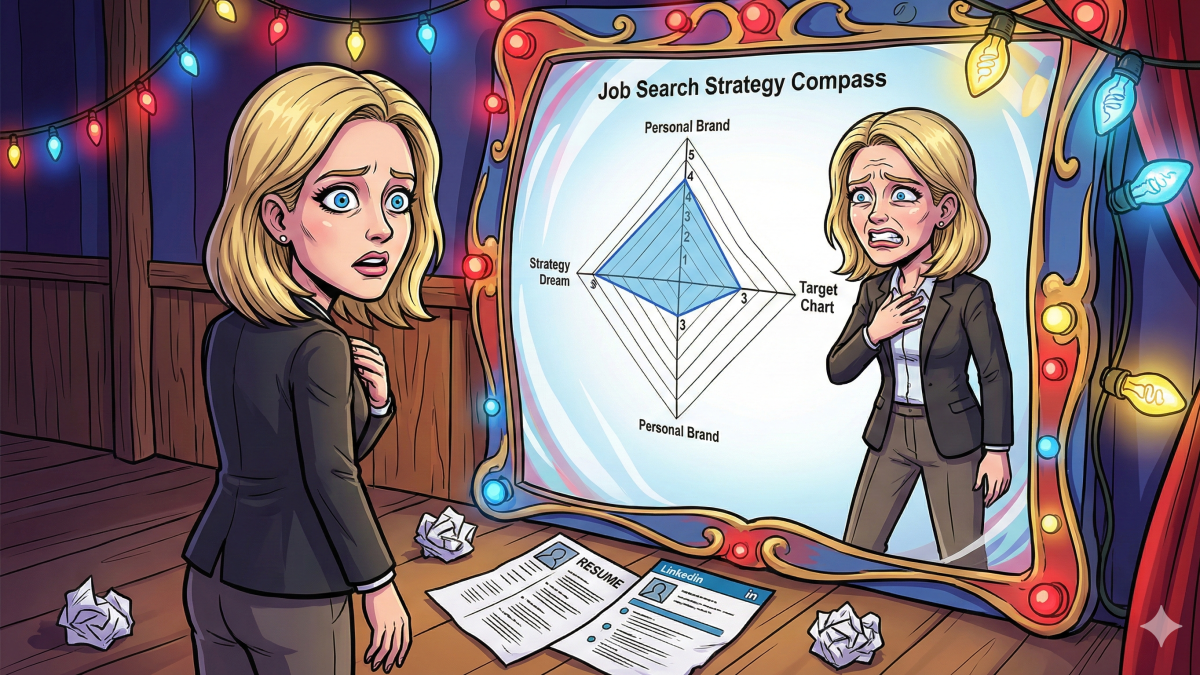
A simple job search analysis can reveal blind spots and sharpen your story. Honest reflection turns discomfort into clarity.
When I say job search analysis...
Most people picture spreadsheets and tracking tools.
But real analysis starts with something much scarier: an honest look at what your job search is actually saying about you.
It will be uncomfortable. Like standing under bad lighting with no filters or excuses. But here’s the thing: that raw view isn’t an attack. It is information.
When the Mirror Finally Shows the Truth
One of my clients, let’s call her Angela, learned this firsthand. After a Job Values audit, she looked at her updated Job Search Strategy Compass and winced. Her Personal Brand score sat at a three. Although that score wasn't terrible, it was far from where she needed it to be.
Her resume and LinkedIn both told a generic story: Experienced marketer seeking new opportunities. Translation? “Hire me for something...anything.”
What the analysis revealed was simple but brutal: she wasn’t projecting versatility, she was broadcasting vagueness. Her brand was doing the opposite of protecting her. It was diluting her message and inviting the wrong roles.
The Clarity That Comes From Discomfort
In effective job search analysis, there is always a moment when clarity arrives disguised as discomfort. Angela stayed with it instead of retreating to “I will fix it later.” That is when her insights landed: recruiters don’t respond to possibilities or potential. They respond to precision.
She rewrote her story with that in mind:
“I help clinical research teams transform data chaos into strategies that create real patient impact.”
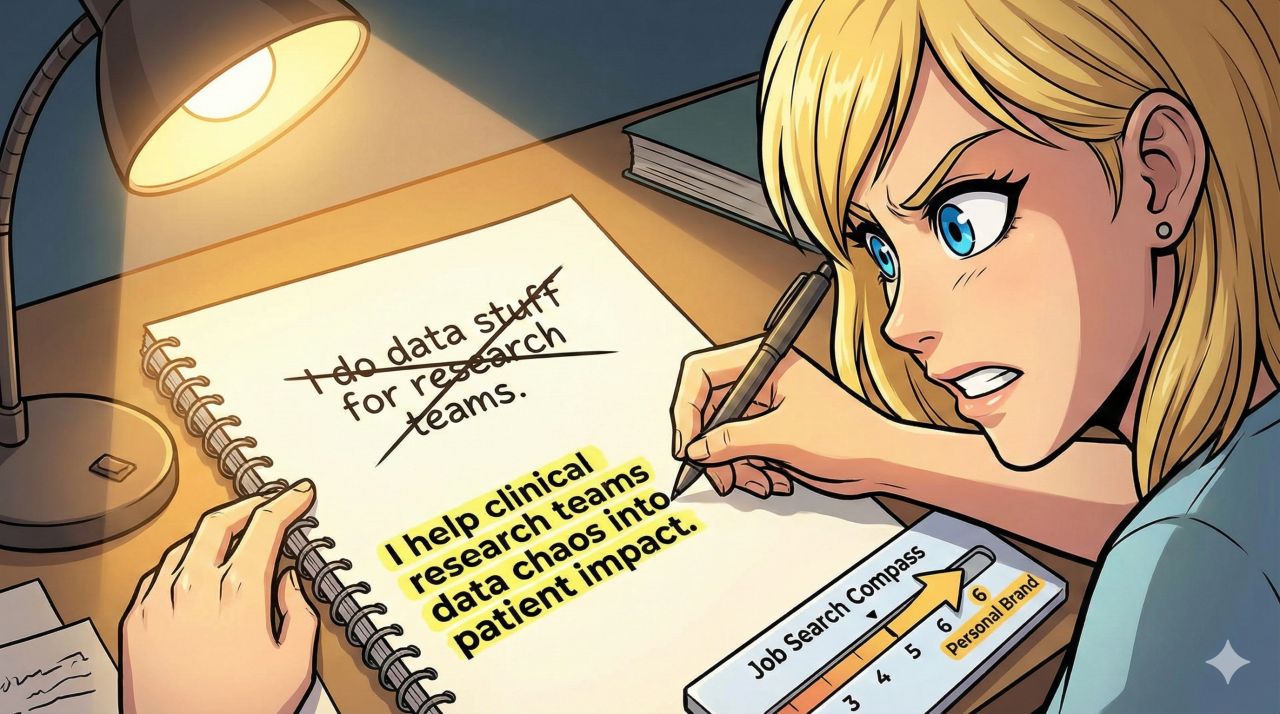
That shift was powerful because it aligned with her job values: impact, mastery, and connection. It also showed hiring managers a clear “why-you.”
Within days, her LinkedIn felt cohesive for the first time. Her resume read like a solution, not a plea. Networking emails landed more naturally because she used her story as an anchor to her messages.
This is what good job search analysis does. It quiets the noise and amplifies the truth.
The Snapshot Becomes a Strategy
Angela’s new habit? A weekly snapshot review. Every Sunday, she takes fifteen minutes to scan her narrative: resume, headlines, messages. If something feels off, she adjusts it immediately.
No guilt. No spiral. Just realignment.
And yes, what she uncovers still stings sometimes. But she now trusts the sting, seeing it as a sign of growth, not failure. The mirror isn’t mean; it is a flashlight.

How to Try It Yourself
Your next step is straightforward:
- Pull up your resume and LinkedIn profile.
- Ask, “If I were the hiring manager, would I hire this person for the roles I am targeting right now?”
- Compare what you read on both your resume and LinkedIn to your actual values and skills.
If there isn't a match, it is time to rewrite or update your story. This isn't about reformatting or adding new content to either your resume or LinkedIn. The gap isn’t about talent. It is about how you communicate your talent.
That is what a true job search analysis uncovers.
The discomfort will fade quickly. The clarity and the confidence the exercise brings will stick around for the long haul.
Categories: : Job Search Best Practices