Career Pivot: The 'Beginner on Paper" Myth
 Angela Roberts
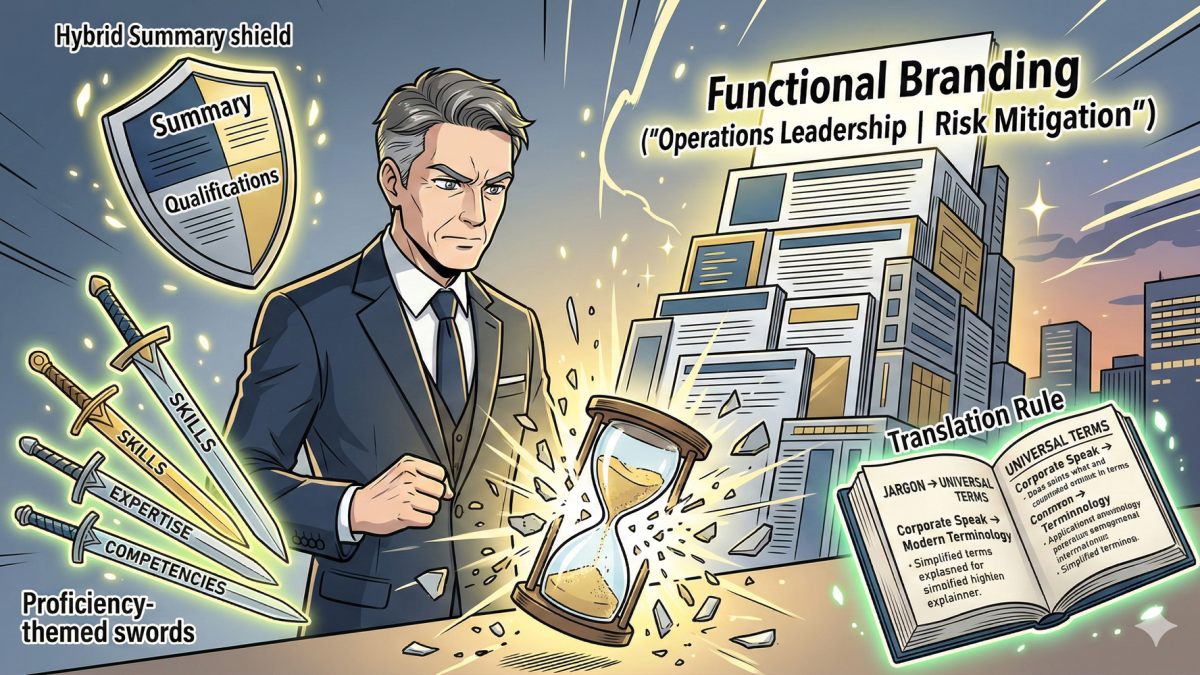
The “6-second scan” is the career pivot killer. Here is how to survive it.
3 Ways to Re-stack Your Resume for a Lateral Move
When you are a senior professional trying to move into a new role or field, the traditional resume is your worst enemy. It highlights your industry tenure at the top, which immediately tells a recruiter, “This person belongs in their old industry.”
To successfully execute a career pivot without being downgraded to a “junior” role, you need to change how you present your data. Here are three ways to re-stack your resume to favor skills-based competency and therefore show your transferable skills rather than focusing on industry history.
1. The Hybrid Summary
Stop using the top 1/3 of your resume to list your last job title. Instead, use a “Functional Branding” headline.
For example, if you are moving from Sales Manager to Project Management, your headline should not be “Business Development” or "Sales Manager." It should be something like “Operations and Project Leadership. Regulatory Compliance. Strategic Risk Mitigation.”
This forces the reader to see your competencies before they see your title, role, or industry. And this means they don't pigeonhole you in the first three seconds.
2. Use Thematic Bullet Points
Most people list their duties. Mid-career professionals should always list their competencies, proficiencies, and achievements. Why? Because you want to highlight the problems you can solve.
So, instead of grouping bullets under “What I did at Company X,” try grouping them by the transferable skills that the new job description asks for. For example, a Project Manager can use categories such as “Strategic Planning” or “Team Transformation.”
Under “Strategic Planning,” you might have:
- Forecasted risks across a 5 million dollar portfolio, delivering 20 percent under budget
- Aligned cross-functional teams to hit quarterly milestones in a regulated environment
Those experiences demonstrate true competence and can come from pharma, education, sales, or whatever. Exhibiting your skills and competency works in every role and every industry.
3. The “Translation” Rule
When you want to pivot, never use a term in your resume that requires an industry-specific dictionary. If you are rebranding for a career shift, you must adopt the lexicon of your target field.
For example, replace “Protocol Adherence” with “Quality Assurance.” Replace “Pedagogy” with “Learning Strategy.” Replace “Territory Management” with “Revenue Territory Optimization.”
You aren't lying on your resume (as long as you have these skills and experiences). You are simply translating the language in it. You are helping the hiring manager bridge the gap between what you did and what they need.
The takeaway is simple. Your resume is currently going into the "black hole of online applications" because your translation isn't hitting the mark. Your resume shouldn't scream “beginner.” It should whisper, “expert who happens to be new to your industry.”
That is the difference between getting ignored and getting invited to the table.
Need Help Translating Your Experience?
All of our coaching packages include a pre-coaching resume review and LinkedIn evaluation. Instead of guessing what will work, you will get a structured plan with expert feedback from a career change coach to help you translate your experience from one role/industry to another.
Book a session here and navigate your career pivot gracefully.
Categories: : Job Search Best Practices, Personal Branding, Resume