Career Pivot: How to Reframe Your Experience for a New Industry
 Savannah York
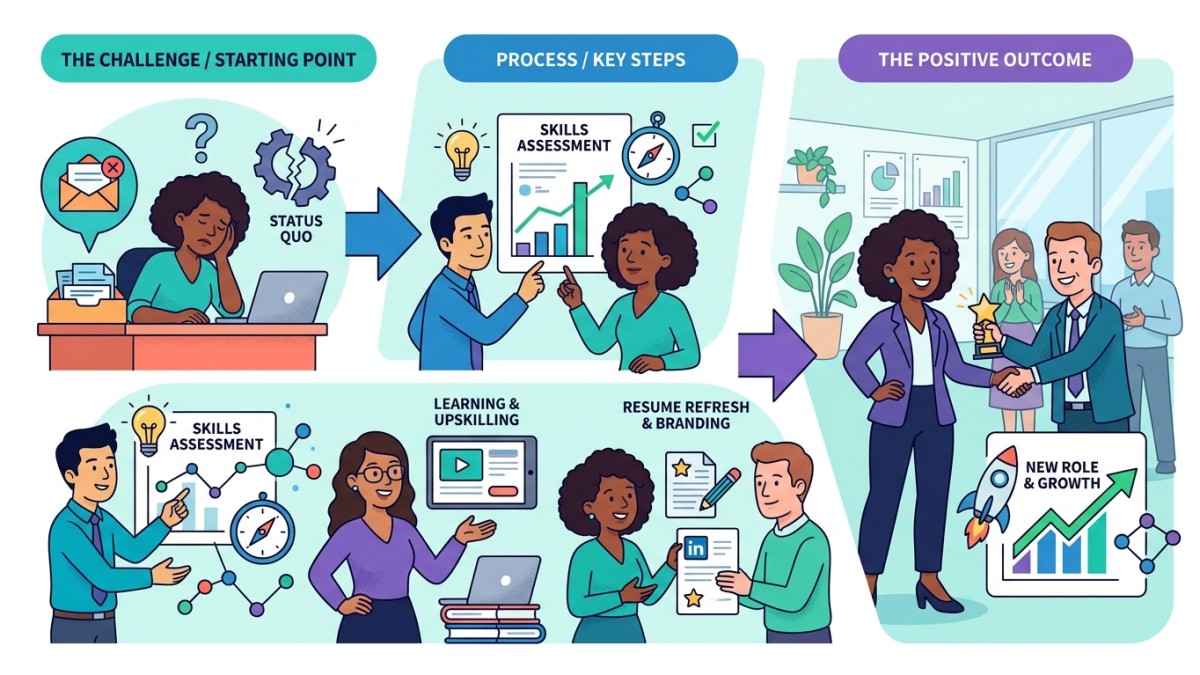
Learn how to frame your skills for a successful Career Pivot and show hiring managers the value you bring.
Career Pivot: How to Turn Your Experience Into a New Opportunity
If you have spent more than ten years in your industry, you probably feel deeply attached to your title. Maybe you are a Senior Director of Sales or a Lead Clinical Research Associate. That title has become part of your identity. People introduce you that way. It appears on your business cards, in your email signature, and on your LinkedIn profile. It reflects everything you have worked hard to earn. But when you start thinking about a Career Pivot, that same title can start to feel limiting.
One of the biggest mistakes mid career professionals make during a Career Pivot is trying to sell their history instead of their skills. Recruiters in a new industry do not always care about the exact noun in your old title. They care about the verbs. In other words, they want to know what you did and what results you drove.
Think about it this way. If you managed a ten million dollar budget in pharmaceuticals, the core skill still matters if you move into fintech. The stakeholders may have different titles. The software may look different. But the skill itself stays the same. Fiscal stewardship still counts.
Skills based hiring
Modern hiring continues to move toward skills based hiring. For professionals planning a Career Pivot, that shift creates a real advantage. Companies want portable value. When you focus on transferable skills for senior managers, you stop asking for permission to enter a new field and start showing how you solve problems.
You become the person who can walk in and help improve results, strengthen teams, and reduce risk.
Here is a simple action step to get started.
Take three major achievements from your current role and remove the industry specific language.
Original: Led a team of 10 to increase regional medical device sales by 15 percent.
Reframed: Led a cross functional team of 10 to drive a 15 percent revenue increase in a high compliance, competitive market.
See the difference? You took something that sounded tied to one industry and reshaped it so it can fit a wider executive audience. When you do this for a Career Pivot, you make it easier for a hiring manager to see your seniority and your value.
Your past success matters
A career change at 40 should not feel like you are giving up the progress you already earned. Instead, it should feel like you are using your past success as currency for your next role.
If you struggle to see the value in your own background, that is completely normal. You have lived your experience for so long that the strongest parts may start to feel ordinary. A career change coach can help you translate that experience into language that opens doors and supports your Career Pivot.
You already have the currency. Now you just need to use it in the right place.
Categories: : career development, Job Search Best Practices, Soft Skills